
Unwind, Rebalance, and Heal: The Ultimate Guide to Reflexology
In today’s fast-paced world, stress lives in our bodies. We carry it in our shoulders, our digestive systems, and especially our feet. If you are searching for a proven, non-invasive way to hit "reset" on your health, foot reflexology might be exactly what your body is craving.
While it feels as relaxing as a luxury spa treatment, reflexology is far more than a standard foot massage. It is an evidence-based holistic therapy designed to calm your nervous system, relieve physical discomfort, and restore natural balance from the inside out.
Here is everything you need to know about how reflexology works, its top health benefits, and what you will experience during your first session.
What is Reflexology? (Reflexology vs. Foot Massage)
At its core, reflexology is a targeted therapy that involves applying specific pressure to points on the feet, hands, and ears.
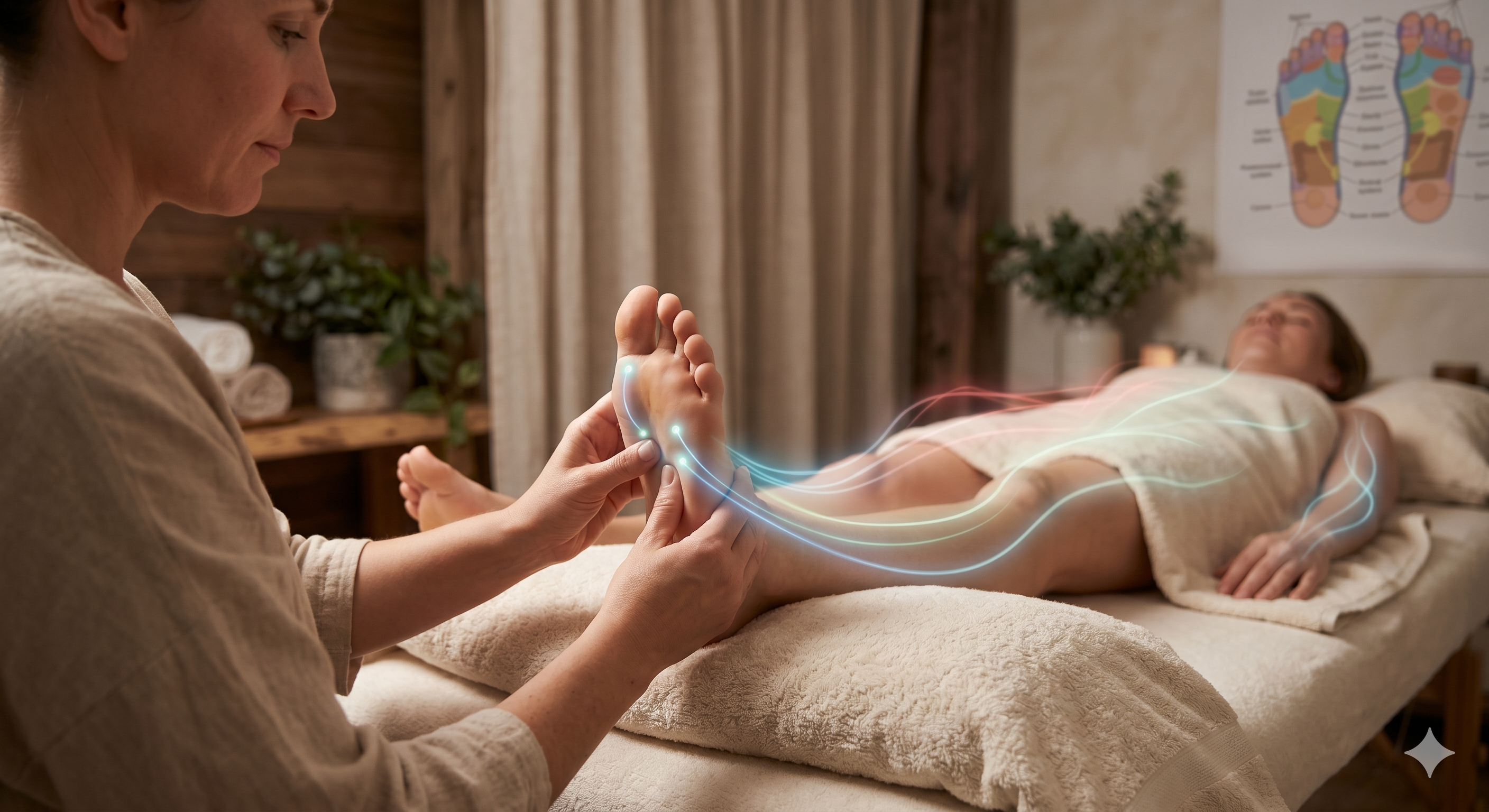
While a traditional foot massage focuses primarily on relaxing superficial muscles, reflexology works on a deeper, systemic level. Practitioners use a detailed reflexology foot map that corresponds directly to specific organs, glands, and physical systems throughout the entire body.
By applying precise pressure to these reflexology pressure points, a trained reflexologist stimulates nerve pathways that communicate directly with your central nervous system, helping your body heal itself naturally.
How and Why Reflexology Works: The Science
How can working on your feet affect the rest of your body? The secret lies in your nervous system and circulatory pathways:
- Nervous System Reset: Your feet contain over 7,000 sensory nerve endings. Stimulating these pathways signals your brain to shift out of "fight-or-flight" mode and activate the parasympathetic nervous system—your body’s natural "rest and digest" state.
- Natural Pain Relief: Reflexology stimulates pressure receptors that help block pain signals sent to the brain while triggering the release of endorphins—your body’s built-in pain relievers.
- Enhanced Blood & Lymphatic Circulation: Focused pressure techniques boost blood flow, delivering fresh oxygen and nutrients to vital organs while helping your body flush out cellular waste.
Proven Health Benefits of Reflexology Treatments
Clients seek out reflexology therapy for a wide range of wellness goals. Incorporating regular sessions into your self-care routine can deliver transformative benefits, including:
- Holistic Stress Relief: By rapidly lowering cortisol (the stress hormone) levels, reflexology provides deep mental and physical relaxation.
- Better, Deeper Sleep: Calming the central nervous system helps regulate your sleep-wake cycles, making reflexology a favorite natural remedy for insomnia.
- Relief from Chronic Pain & Headaches: Regular reflexology sessions are widely used for managing tension headaches, migraines, lower back pain, and plantar fasciitis.
- Improved Digestion: Because your gut health is tied directly to stress, relaxing the nervous system helps ease bloating, sluggish digestion, and symptoms of IBS.
- Boosted Energy & Circulation: Clearing tension and improving blood flow leaves you feeling lighter, revitalized, and centered.
What to Expect During Your Reflexology Session
If you are booking your first reflexology appointment, here is how to prepare so you can arrive relaxed and ready to unwind.
1. Personal Consultation
Your treatment begins with a short intake conversation. Your practitioner will discuss your health goals, stress levels, and any specific areas of pain or discomfort you want to address.
2. Maximum Comfort (Fully Clothed)
Unlike full-body massages, you remain fully clothed during a reflexology treatment. You will simply remove your shoes and socks before relaxing in a cushioned treatment chair or massage table with comfortable support for your legs.
3. Targeted Pressure Point Therapy
After warming the feet with warm towels or gentle oils, your reflexologist will use specialized thumb and finger techniques (such as "thumb-walking") across your soles, arches, toes, and ankles.
- How does it feel? The pressure is firm, soothing, and tailored to your comfort level. You may feel spots that are slightly tender or "crunchy"—these indicate areas of tension corresponding to different parts of the body. Your practitioner will adjust the intensity to ensure a relaxing experience.
4. Post-Session Aftercare
Sessions typically last 45 to 60 minutes. Afterward, most clients report feeling a deep sense of calm, mental clarity, and physical ease. Drinking plenty of water after your appointment helps support circulation and flush away released toxins.
Ready to Reset Your Body and Mind?
Your health journey starts from the ground up. Whether you are struggling with daily stress, lingering joint pain, or trouble sleeping, reflexology offers a safe, natural path back to balance.