

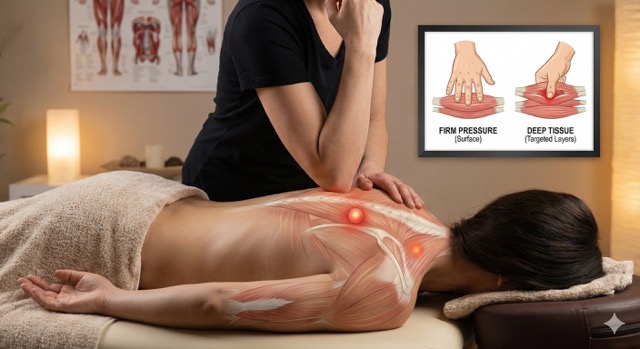

Title: Unlocking Relief: A Guide to Deep Tissue Massage
Have you ever felt a persistent knot in your shoulder that just won't go away, or chronic stiffness in your lower back? If so, a deep tissue massage might be exactly what your body needs. Far more than just a relaxing spa treatment, deep tissue massage is a therapeutic modality designed to target the deepest layers of muscle and connective tissue.
In this post, we'll dive into what deep tissue massage really is, the techniques involved, its many benefits, and how it differs from a massage that simply uses firm pressure.
What is a Deep Tissue Massage?
Deep tissue massage is a specific type of massage therapy that focuses on realigning deeper layers of muscles and connective tissue. It is particularly helpful for chronic aches and pains and contracted areas such as a stiff neck and upper back, low back pain, leg muscle tightness, and sore shoulders.
Unlike a classic Swedish massage, which is used for relaxation, deep tissue massage is designed to address specific problems. The therapist works to break down adhesions—bands of painful, rigid tissue (often called "knots")—that can disrupt circulation and cause pain, limited movement, and inflammation.
Techniques Used
To reach the deep layers of muscle, a therapist uses slow, deliberate strokes that focus pressure on layers of muscles, tendons, or other tissues deep under your skin. The techniques can include:
Slow, Deep Strokes: These are similar to Swedish massage strokes but are slower and apply more pressure to reach deeply into the muscles and fascia.
Direct Pressure: The therapist applies sustained pressure to specific points to release trigger points and knots.
Friction: Your therapist may use their fingers, thumbs, knuckles, forearms, or elbows to apply pressure across the grain of your muscles to break down adhesions and realign tissue fibers.
It's important to communicate with your therapist during the session. While some discomfort is normal as they work on tense areas, the massage should not be unbearably painful.
Benefits of Deep Tissue Massage
The targeted nature of deep tissue massage offers a wide range of physical and mental benefits:
- Pain Relief: It is highly effective for chronic pain conditions like fibromyalgia, lower back pain, and plantar fasciitis. It can also help with sports injuries like tennis elbow.
- Improved Mobility: By breaking down knots and scar tissue, this type of massage can help increase your range of motion and flexibility.
- Reduced Inflammation and Better Circulation: The pressure and strokes help to move toxins from the muscles and improve blood flow, which aids in healing and reduces inflammation.
- Stress and Tension Reduction: While it's a therapeutic massage, the release of chronic muscle tension can lead to a significant reduction in overall stress and anxiety.
- Rehabilitation: It assists in the healing process of injured muscles and can be a valuable part of a rehabilitation program.
Deep Tissue vs. Firm Pressure Massage: What's the Difference?
This is one of the most common questions people ask. It's easy to confuse the two, but they are fundamentally different.
- Firm Pressure Massage: This refers to the intensity of the massage. You can have a Swedish massage (a technique focused on relaxation with long, gliding strokes) with firm pressure. The goal is still general relaxation and increased circulation, but the therapist pushes harder. It's about how the massage feels.
- Deep Tissue Massage: This refers to the technique and goal. It is a specific therapy aimed at treating musculoskeletal issues in the deeper layers of the body. The therapist uses slow, focused strokes to target specific problems like knots and chronic pain. While deep tissue massage often involves firm pressure to reach those layers, the pressure is a means to an end, not the goal itself. You can even have a deep tissue massage that doesn't feel extremely firm, as long as it is successfully targeting the deep tissues.
In short, "firm pressure" is a preference, while "deep tissue" is a specific therapy.
Is Deep Tissue Massage Right for You?
If you have chronic pain, a specific injury, or persistent muscle tension that regular massage hasn't been able to resolve, deep tissue massage could be a great option. It's always best to consult with a qualified massage therapist to discuss your specific needs and determine the best treatment plan for your body.
Ready to experience the benefits for yourself? Book a session with a certified deep tissue therapist and start your journey toward a more pain-free and mobile life.